







In the medical and healthcare industry, sterile gauze balls are essential items used for a variety of purposes, from wound cleaning to surgical procedures. One of the frequently asked questions is whether sterile gauze balls are made from natural fibers. As a supplier of sterile gauze balls, I am well - versed in this topic and would like to share some insights.
Composition of Sterile Gauze Balls
Sterile gauze balls can be made from both natural and synthetic fibers, and each type has its own unique characteristics and applications.
Natural Fibers
Natural fibers have been used in the production of gauze for a long time. Cotton is the most common natural fiber used in making sterile gauze balls. Cotton has several advantages that make it a popular choice. Firstly, it is highly absorbent. When dealing with wounds, the ability to soak up blood, exudate, and other fluids is crucial. Cotton can quickly wick away moisture from the wound surface, helping to keep the wound dry and reducing the risk of infection.
Secondly, cotton is soft and gentle on the skin. It is less likely to cause irritation, especially for patients with sensitive skin. This is particularly important when the gauze comes into direct contact with open wounds. The natural texture of cotton also allows for good breathability. Wounds need to "breathe" to promote the healing process, and cotton gauze allows air to circulate around the wound, which is beneficial for cell regeneration.
In addition, cotton is a renewable resource. It is biodegradable, which is an important consideration in today's environmentally - conscious world. Many healthcare facilities prefer using products made from natural and sustainable materials, and cotton - based sterile gauze balls meet this requirement.
Synthetic Fibers
On the other hand, synthetic fibers are also widely used in the production of sterile gauze balls. Polyester is a common synthetic fiber used in this context. Synthetic fibers offer some advantages over natural fibers. They are often more durable and resistant to tearing. In high - stress medical situations, such as during surgical procedures where the gauze may be manipulated vigorously, synthetic - fiber gauze can maintain its integrity better than cotton gauze.
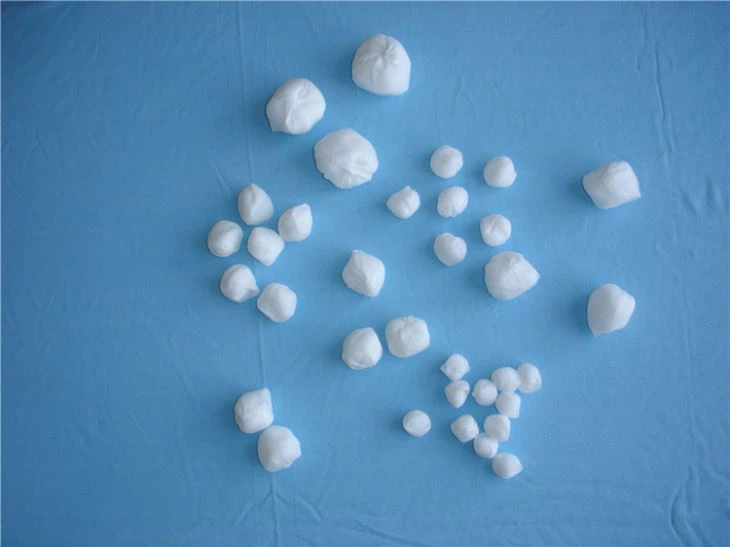

Synthetic fibers can also be engineered to have specific properties. For example, some synthetic gauze balls can be made to have enhanced antimicrobial properties. This can provide an additional layer of protection against infection, which is a top priority in healthcare settings. Moreover, synthetic fibers can be produced in a more consistent quality compared to natural fibers. The manufacturing process of synthetic fibers can be more tightly controlled, resulting in gauze balls with uniform thickness, density, and absorbency.
Manufacturing Process and Sterilization
Whether the gauze balls are made from natural or synthetic fibers, the manufacturing process follows strict quality control measures. The fibers are first spun into yarns, which are then woven or non - woven to form the gauze fabric. The fabric is then cut into appropriate sizes and rolled or folded into ball shapes.
After the production of the gauze balls, they undergo a sterilization process. There are several methods of sterilization, including steam sterilization, ethylene oxide sterilization, and gamma radiation sterilization. Steam sterilization is a common and cost - effective method for natural - fiber gauze balls. It uses high - pressure steam to kill microorganisms. However, it may not be suitable for all types of synthetic fibers, as high temperatures can damage some synthetic materials.
Ethylene oxide sterilization is effective for both natural and synthetic fibers. It can penetrate the packaging and sterilize the gauze balls at relatively low temperatures. Gamma radiation sterilization is another option. It uses high - energy gamma rays to destroy microorganisms. This method is fast and does not leave any chemical residues, but it requires specialized equipment.
Market Demand and Product Range
The market demand for sterile gauze balls is influenced by various factors, including the growth of the healthcare industry, increasing awareness of infection control, and the demand for high - quality medical products. As a supplier, we offer a wide range of sterile gauze balls to meet different customer needs.
We have Non - sterile Non - woven Gauze Ball for applications where sterility is not a strict requirement, such as general cleaning and first - aid in non - medical settings. Our Non - sterile Gauze Ball is also a popular choice for pre - sterilization procedures or for use in less critical areas.
Of course, our main product is the Sterile Gauze Ball. We offer sterile gauze balls made from both natural and synthetic fibers. Our natural - fiber sterile gauze balls are made from high - quality cotton, ensuring maximum absorbency and skin - friendliness. Our synthetic - fiber sterile gauze balls are designed to provide durability and specific functional properties, such as antimicrobial protection.
Quality Assurance and Customer Satisfaction
As a supplier, we understand the importance of quality assurance. We have a strict quality control system in place from the raw material selection to the final product packaging. Our raw materials are sourced from reliable suppliers, and we conduct regular inspections to ensure that they meet the required standards.
During the manufacturing process, we monitor every step to ensure the consistency and quality of the gauze balls. After sterilization, we perform microbiological tests to confirm the sterility of the products. We also pay attention to the packaging of the sterile gauze balls. The packaging is designed to maintain the sterility of the product until it is opened by the end - user.
Customer satisfaction is our top priority. We work closely with our customers to understand their specific needs and provide them with the most suitable products. We offer technical support and after - sales service to ensure that our customers are satisfied with our products.
Conclusion
In conclusion, sterile gauze balls can be made from both natural and synthetic fibers, each with its own advantages. Natural - fiber gauze balls, mainly made from cotton, offer high absorbency, softness, and breathability, as well as environmental benefits. Synthetic - fiber gauze balls provide durability and the potential for enhanced functional properties.
If you are in the market for sterile gauze balls, whether for a hospital, clinic, or other healthcare facility, we are here to meet your needs. We offer a wide range of products with high - quality assurance. Contact us today to discuss your requirements and start a procurement negotiation. We look forward to serving you and contributing to the success of your healthcare operations.
References
- American Society for Testing and Materials (ASTM). Standard specifications for medical gauze.
- World Health Organization (WHO). Guidelines on infection prevention and control in health care facilities.
- Textile Research Journal. Studies on the properties of natural and synthetic fibers used in medical textiles.