





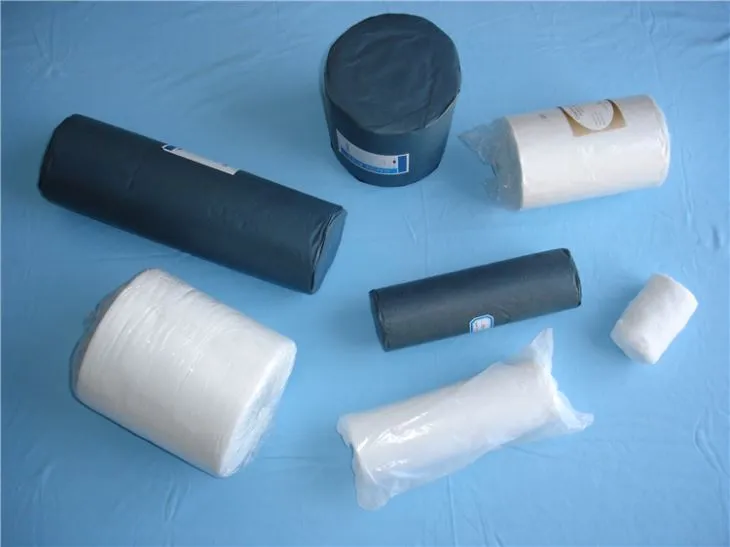
Do cotton wool rolls dissolve in water? This is a question that often comes up, especially among those in industries that use these products regularly. As a supplier of Cotton Wool Roll, I've encountered this query numerous times. In this blog, I'll delve into the science behind cotton wool rolls and their interaction with water.

Understanding Cotton Wool Rolls
Cotton wool rolls are made primarily from cotton fibers. Cotton is a natural fiber that has been used for centuries due to its softness, absorbency, and comfort. These rolls are commonly used in various industries, including healthcare, beauty, and dental care. In the dental field, for example, Dental Roll is a specialized type of cotton wool roll used to absorb saliva and keep the oral cavity dry during dental procedures.
The Structure of Cotton Fibers
To understand whether cotton wool rolls dissolve in water, we need to look at the structure of cotton fibers. Cotton fibers are composed mainly of cellulose, a complex carbohydrate. Cellulose is a long-chain polymer made up of glucose units linked together. The structure of cellulose gives cotton its strength and durability.
The cellulose chains in cotton are held together by hydrogen bonds. These bonds are relatively strong, but they can be affected by certain conditions. When cotton is exposed to water, the water molecules can interact with the cellulose chains. The hydrogen bonds between the cellulose chains can be disrupted to some extent, allowing the water to penetrate the fibers.
Absorption vs. Dissolution
It's important to distinguish between absorption and dissolution. When a cotton wool roll is placed in water, it absorbs the water. The water molecules are drawn into the spaces between the cotton fibers through a process called capillary action. Capillary action occurs because of the cohesive and adhesive forces between the water molecules and the cotton fibers.
Absorption is a physical process where the water is held within the structure of the cotton wool roll. The cotton fibers do not break down or dissolve in the water. Instead, they become saturated with water, which can make the roll heavier and more pliable.
In contrast, dissolution is a chemical process where a substance breaks down into its individual molecules and disperses in a solvent. For a substance to dissolve, the forces holding its molecules together must be overcome by the solvent. In the case of cotton wool rolls, the cellulose chains are too tightly bound to be easily broken down by water.
Factors Affecting the Interaction with Water
Several factors can affect how cotton wool rolls interact with water. The quality of the cotton, the processing method, and the presence of any additives can all play a role.
- Quality of Cotton: Higher-quality cotton fibers tend to have a more uniform structure and better resistance to water. They are less likely to break down or lose their shape when exposed to water.
- Processing Method: The way the cotton is processed can also affect its interaction with water. For example, if the cotton is treated with certain chemicals during processing, it may have different properties. Some treatments can make the cotton more water-resistant, while others can enhance its absorbency.
- Additives: Some cotton wool rolls may contain additives such as waxes or oils. These additives can affect the roll's ability to absorb water and may also change its solubility properties.
Real-World Applications
Understanding the behavior of cotton wool rolls in water is important for their various applications. In the healthcare industry, for example, cotton wool rolls are used for wound care. They need to be able to absorb fluids without dissolving or leaving behind any residue. In the beauty industry, cotton wool rolls are used for makeup removal and skin cleansing. They should be able to absorb makeup and dirt without breaking apart in water.
In the dental industry, Dental Roll is used to keep the oral cavity dry during dental procedures. These rolls need to be able to absorb saliva effectively without dissolving or disintegrating.
Testing the Dissolution of Cotton Wool Rolls
To test whether a cotton wool roll dissolves in water, you can conduct a simple experiment. Take a small piece of the cotton wool roll and place it in a container of water. Observe the roll over time. You may notice that the roll becomes saturated with water and may become softer, but it should not dissolve completely.
If you want to test the roll's durability in water, you can gently stir the water or squeeze the roll. The roll should maintain its shape and integrity, indicating that it does not dissolve easily.
Conclusion
In conclusion, cotton wool rolls do not dissolve in water. They are designed to absorb water through capillary action, which allows them to hold fluids without breaking down. The cellulose structure of cotton fibers is too strong to be easily dissolved by water. While the roll may become saturated and softer when exposed to water, it will not disintegrate or dissolve completely.
As a supplier of Cotton Wool Roll, I understand the importance of providing high-quality products that meet the needs of our customers. Whether you are in the healthcare, beauty, or dental industry, our cotton wool rolls are designed to perform effectively and reliably.
If you are interested in purchasing our cotton wool rolls or have any questions about our products, please feel free to contact us. We are always happy to assist you with your procurement needs and provide you with the best possible service.
References
- "The Chemistry of Cotton." Textile Chemistry, by J. W. S. Hearle.
- "Cellulose: Structure, Properties, and Applications." Cellulose Chemistry and Technology, by O. J. Rahn.