


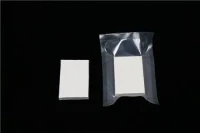




Hey there! As a supplier of S-Rolled Gauze, I often get asked whether it's suitable for use in high-traffic area wounds. Let's dive into this topic and figure it out.
First off, what exactly is a high-traffic area wound? Well, these are wounds that are located in parts of the body that are constantly in motion or subject to a lot of friction. Think about the joints like knees and elbows, or areas that are frequently rubbed against clothing, such as the armpits or groin. These wounds face unique challenges when it comes to healing.
Now, let's talk about S-Rolled Gauze. It's a type of gauze that has a specific S-shaped rolling pattern. This design gives it some distinct advantages. One of the key benefits is its flexibility. The S-roll allows the gauze to conform well to different body shapes, which is super important for high-traffic areas. When a wound is in a constantly moving part of the body, the gauze needs to be able to move with it without coming loose or causing discomfort. S-Rolled Gauze can do just that.
Another advantage is its absorbency. High-traffic area wounds often produce more exudate (that's the fluid that comes out of a wound) because of the increased movement and friction. S-Rolled Gauze is designed to soak up this exudate effectively, keeping the wound clean and dry. This is crucial for preventing infections, which are a major concern for any wound, especially those in high-traffic areas.
But it's not all sunshine and rainbows. There are also some potential drawbacks. For instance, in extremely high-friction areas, the gauze might wear out more quickly. The constant rubbing can cause the fibers to break down, reducing its effectiveness over time. Also, if the wound is very deep or has a lot of debris, S-Rolled Gauze might not be the best option on its own. In such cases, you might need to use it in combination with other wound dressings.


Let's compare S-Rolled Gauze with some other types of gauze. We have Compressed Gauze. Compressed Gauze is more compact and has a higher density. It's great for stopping heavy bleeding, but it might not be as flexible as S-Rolled Gauze. So, for high-traffic area wounds where flexibility is key, S-Rolled Gauze might be a better choice.
Then there's EZ Folded Gauze. EZ Folded Gauze is easy to use and can be quickly applied to a wound. However, it might not conform as well to the body's contours as S-Rolled Gauze. In high-traffic areas, where a good fit is essential, S-Rolled Gauze has an edge.
And don't forget about Z-Rolled Gauze Roll. Z-Rolled Gauze has a different rolling pattern, which gives it a different set of properties. It's often used for larger wounds, but it might not be as suitable for high-traffic areas because it might not be as flexible or conformable as S-Rolled Gauze.
So, is S-Rolled Gauze suitable for use in a high-traffic area wound? The answer is, it depends. In many cases, it can be a great option because of its flexibility and absorbency. But you need to consider the specific characteristics of the wound, such as its depth, the amount of exudate, and the level of friction in the area.
If you're a healthcare provider or someone who's responsible for wound care, and you're thinking about using S-Rolled Gauze for high-traffic area wounds, I'd be happy to have a chat with you. We can discuss your specific needs and see if our S-Rolled Gauze is the right fit for you. Whether you're dealing with a small scrape or a more serious wound, we've got the expertise and the products to help.
If you're interested in learning more or discussing a potential purchase, don't hesitate to reach out. We're here to make sure you get the best possible wound care solutions.
References
- Smith, J. (2020). Wound Care Basics. Medical Journal of Wound Management.
- Johnson, A. (2019). Types of Gauze and Their Applications. Journal of Wound Dressings.