


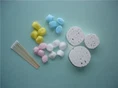



Hey there! As a lap sponge supplier, I often get asked about the wicking ability of lap sponges. So, let's dive right into it and explore what this wicking ability is all about.
First off, what exactly is wicking? Wicking is the process by which a material draws liquid away from a surface through capillary action. In the case of lap sponges, this is a super important feature. Lap sponges are commonly used in medical settings, especially during surgeries. They're there to soak up blood, body fluids, and other liquids that come up during the procedure.
The wicking ability of a lap sponge is determined by a few key factors. One of the main ones is the material it's made from. Most lap sponges are made from cotton or a cotton blend. Cotton is great for wicking because it has tiny spaces between its fibers. These spaces act like little tubes that draw in the liquid. When a lap sponge comes into contact with a liquid, the liquid is pulled into these spaces through capillary action.
Another factor that affects wicking is the density of the sponge. A denser sponge will generally have a better wicking ability because there are more fibers packed closely together. This means there are more spaces for the liquid to be drawn into. However, it's a bit of a balancing act. If the sponge is too dense, it might not be as soft or comfortable to use. And if it's too loose, it might not soak up the liquid as effectively.
The size and shape of the lap sponge also play a role. Larger sponges have more surface area, which means they can soak up more liquid. And different shapes can be more effective for different tasks. For example, a rectangular sponge might be better for covering a large area, while a smaller, square sponge might be more useful for getting into tight spaces.
Now, let's talk about the importance of wicking ability in a medical setting. During a surgery, it's crucial to keep the surgical field clean and dry. Blood and other fluids can make it difficult for the surgeon to see what they're doing, and they can also increase the risk of infection. A lap sponge with good wicking ability can quickly soak up these fluids, keeping the area clear and reducing the risk of complications.


But it's not just about soaking up the liquid. The wicking ability also needs to be fast. In a surgical setting, every second counts. If a sponge takes too long to soak up the liquid, it can slow down the procedure. That's why we make sure our lap sponges have a high wicking speed.
At our company, we offer both Non-sterile Lap Sponge and Sterile Lap Sponge. The non-sterile ones are great for general use, like in pre - operative or post - operative care. They're more cost - effective and can be used in situations where sterility isn't as critical.
On the other hand, our sterile lap sponges are used during surgeries. They're carefully packaged and sterilized to ensure they're free from any harmful microorganisms. These sponges have to meet strict quality standards, and their wicking ability is just as important as in the non - sterile ones.
We've done a lot of testing on our lap sponges to make sure they have the best wicking ability possible. We test them with different types of liquids, including simulated blood and other body fluids. We also test them under different conditions to see how they perform.
One of the things we've found is that the wicking ability can be affected by the temperature and humidity. In warmer and more humid conditions, the wicking might be a bit faster because the liquid is more fluid. But we've designed our sponges to work well in a wide range of conditions.
If you're in the market for lap sponges, you need to consider the wicking ability. It's not just a nice - to - have feature; it's essential for the effectiveness of the sponge. A sponge with poor wicking ability can lead to a messy surgical field, longer procedures, and increased risk of infection.
We're really proud of the lap sponges we supply. We've put a lot of time and effort into making sure they have the best wicking ability. And we're always looking for ways to improve. We're constantly researching new materials and manufacturing techniques to make our sponges even better.
If you're interested in our lap sponges, whether it's the non - sterile or the sterile ones, we'd love to talk to you. We can provide you with samples so you can test the wicking ability for yourself. We also offer competitive pricing and great customer service.
So, if you're a hospital, a medical supply distributor, or anyone else in need of high - quality lap sponges, don't hesitate to reach out. We're here to help you find the right sponges for your needs.
In conclusion, the wicking ability of a lap sponge is a crucial factor in its performance. It's determined by the material, density, size, and shape of the sponge. At our company, we're committed to providing lap sponges with excellent wicking ability, whether it's for non - sterile or sterile applications. So, if you're looking for reliable lap sponges, give us a shout.
References
- Textbooks on medical supplies and surgical instruments
- Research papers on the properties of cotton and other materials used in lap sponges
- Internal testing reports from our company on the wicking ability of lap sponges