


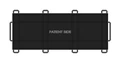

The materials and types of triangular bandages can not only make us more calm in the face of emergencies, but also ensure that we use this first aid weapon correctly to maximize the health and safety of the injured.
There are two main materials for triangular bandages: cotton and nylon. These two materials have their own advantages, and their characteristics determine that they play different roles in different first aid scenarios.
Cotton triangular bandages
Cotton materials have always been the darling of medical supplies. Cotton triangular bandages are like a gentle guardian. They have good breathability, which is like opening a breathable window for the skin. When our skin is in direct contact with the bandage, we will not feel uncomfortable due to the stuffiness and humidity, nor will it cause skin allergies and other problems. Because of its breathability, the skin around the wound can breathe freely, which accelerates the healing process of the wound. It is especially suitable for bandaging minor abrasions or burns. In this case, the wound needs to be kept dry and breathable, and the cotton triangular bandage just meets this need. It is like a protective film that can prevent the invasion of external bacteria and allow the wound to recover slowly in a comfortable environment.
Nylon triangular bandage
Nylon is a durable material that can withstand greater pressure and tension. When facing more serious trauma, a nylon triangular bandage becomes the first choice. It tightly wraps the injured part, just like adding a solid yoke to the injured joint, preventing the injured part from moving further and alleviating the pain of the injured. Moreover, the durability of the nylon bandage makes it not easily damaged during long-term use, and it can continue to provide stable support for the injured part.
There are many types of triangular bandages, each with its own unique design and use, which can meet different first aid needs.
Ordinary cloth bandage
An ordinary cloth bandage can be said to be the most common triangular bandage, which is the most basic type of bandage. It is simple to make and low-cost, but it has a wide range of uses. When the wound is bleeding, wrapping the ordinary cloth bandage tightly around the wound can play a role in compressing and stopping bleeding.
Special-shaped bandages for specific limbs or body parts
With the development of medicine and the continuous improvement of people's demand for first aid, special-shaped bandages designed for specific limbs or body parts have come into being. These bandages are designed according to the physiological structure and characteristics of different parts of the human body, just like clothes tailored for specific body parts.
During exercise, the ankle needs to bear greater pressure and torsion, which is prone to sprains and other situations. The ankle support bandage is designed for this feature. Its shape and structure can fit the ankle joint tightly, providing better support and fixation.
Elastic bandage
An elastic bandage is a bandage with special functions. It can provide a certain amount of pressure and gently squeeze the injured part. This pressure helps to reduce blood flow to the limbs and is often used to support sprains or strains. When we sprain or strain during exercise, the injured part will swell and hurt. This is because the blood vessels in the injured part rupture and blood seeps into the surrounding tissues. By applying appropriate pressure, the elastic bandage can promote blood return and reduce swelling and congestion.
Triangular bandage
The triangular bandage is a multifunctional bandage. Its uniqueness lies in its flexibility and variability. It can be used temporarily and can even be made from waste cloth or a piece of clothing. This feature makes it highly practical in emergency situations.