

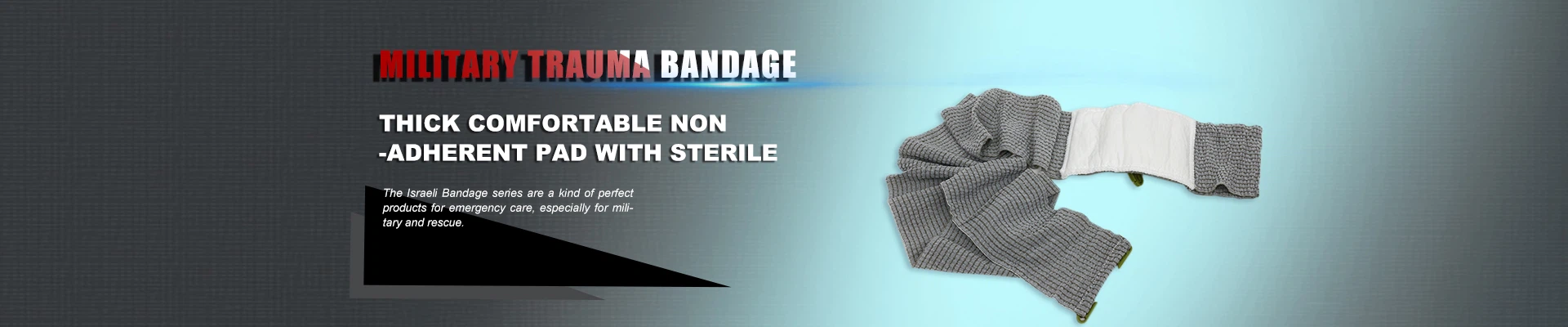




First aid wound bandages are medical materials used for bandaging wounds, securing dressings, and applying pressure to stop bleeding, playing a crucial role in emergency situations.
First aid wound bandages are typically made of high-quality cotton with a tight fiber structure, manufactured using a special weaving process. The yarn density can reach 85 threads per square centimeter. This high yarn density gives the bandage good toughness, making it less prone to breakage and better able to withstand external pulling forces during bandaging.
It possesses an ideal modulus of elasticity. According to relevant studies, in tensile tests, under a tensile force of [specific weight value], the elongation is controlled within 30%, ensuring that it provides appropriate pressure when bandaging wounds without causing secondary damage due to excessive stretching. In terms of breathability, the surface of first aid wound bandages is distributed with numerous micropores. These pores are uniform in size, with an average diameter of approximately 25 micrometers, and the number of pores per square millimeter can reach approximately 45. Good breathability helps air circulate around the wound, reducing stuffiness and bacterial growth. First-aid wound bandages come in various widths, commonly including 5cm, 7.5cm, and 10cm. Different widths are suitable for different wound areas; narrower bandages are suitable for small wounds like fingers, while wider bandages are better suited for larger wounds on the limbs. In terms of absorbency, they can absorb up to100% of their own weight in water in a short time, quickly absorbing blood and tissue fluid from the wound, keeping it relatively dry and promoting healing.
The edges of first-aid wound bandages undergo special treatment, using heat-melt cutting or laser trimming technology, resulting in smooth, neat edges without burrs or roughness, preventing scratches to the patient's skin during bandaging. These bandages also have antibacterial properties; by adding an appropriate amount of silver ion antibacterial agent, tests have shown an antibacterial rate of over 99.5% against common bacteria such as Staphylococcus aureus and Escherichia coli, effectively reducing the risk of wound infection. The adhesive design of the emergency wound bandage is scientifically sound. It uses medical-grade pressure-sensitive adhesive, which adheres quickly to the skin upon application, achieving an adhesion strength of up to 1.8 N/cm. Furthermore, it leaves no adhesive residue on the skin upon removal and does not cause irritation. Its color is typically white or light blue; white aligns with the cleanliness of a medical environment, while light blue has a visually calming effect, helping to alleviate patient anxiety.
The emergency wound bandage exhibits excellent flexibility. After repeated bending tests, it maintains its shape and performance without breaking or delaminating, allowing for flexible bandaging on various body parts.