


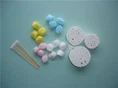

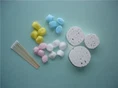


Do cotton wool balls have a smell? This is a question that many people may not have thought about, but it's an important one, especially for those in industries that rely on these versatile products. As a supplier of Cotton Wool Ball, I've encountered this query quite often, and I'm here to provide a comprehensive answer based on scientific knowledge and practical experience.
The Natural State of Cotton Wool Balls
Cotton, the primary material used in making cotton wool balls, is a natural fiber. In its pure, unprocessed form, cotton has a very mild, almost imperceptible smell. It's often described as a faint, earthy or plant - like aroma. This is because cotton is a plant product, and it retains some of the natural scents associated with the plant itself. When cotton is harvested and ginned (separated from the seeds), it still has this natural, subdued odor.
However, most of the cotton used in the production of cotton wool balls undergoes a series of processing steps. These steps are designed to clean, refine, and prepare the cotton for use. During the cleaning process, impurities such as dirt, leaves, and other debris are removed. This initial cleaning can reduce the natural odor of the cotton to some extent.
Processing and Its Impact on Smell
After the initial cleaning, the cotton is often bleached. Bleaching is a common step in cotton processing, especially for white cotton wool balls. The most commonly used bleaching agent is hydrogen peroxide. This chemical helps to whiten the cotton and make it more aesthetically pleasing. While hydrogen peroxide is generally considered a safe and environmentally friendly bleaching agent, it can leave a slight chemical smell on the cotton. However, modern manufacturing processes usually include thorough rinsing and drying steps to minimize this residual odor.
Another important step in the production of cotton wool balls is sterilization. Sterile Cotton Wool Ball are in high demand, especially in the medical and cosmetic industries. There are several methods of sterilization, including steam sterilization and gamma irradiation. Steam sterilization uses high - pressure steam to kill bacteria and other microorganisms. This process is unlikely to add a significant smell to the cotton wool balls, as steam is a natural substance.
Gamma irradiation, on the other hand, uses high - energy gamma rays to sterilize the product. Some people believe that gamma - irradiated products may have a slight "irradiation smell." However, scientific research has shown that this smell is usually very faint and dissipates quickly. In fact, many gamma - irradiated cotton wool balls are indistinguishable in terms of smell from non - irradiated ones after a short period of time.
Packaging and Storage
The packaging of cotton wool balls can also affect their smell. If the packaging is not airtight, the cotton wool balls may absorb odors from the surrounding environment. For example, if they are stored in a warehouse with strong - smelling chemicals or foods, they may take on those odors. On the other hand, high - quality, airtight packaging can help to preserve the natural state of the cotton wool balls and prevent them from absorbing external odors.


Proper storage conditions are also crucial. Cotton wool balls should be stored in a cool, dry place. Excessive heat and humidity can promote the growth of mold and mildew, which will give the cotton wool balls a musty smell. Additionally, if the storage area is exposed to sunlight for long periods, the cotton may undergo some chemical changes that could potentially affect its smell.
Different Applications and Smell Requirements
The smell of cotton wool balls can be a critical factor in different applications. In the medical field, for example, patients and medical staff expect sterile cotton wool balls to be odorless. Any strong or unusual smell could indicate contamination or improper processing, which would be unacceptable in a medical setting.
In the cosmetic industry, the situation is a bit more complex. While many consumers prefer odorless cotton wool balls for skincare applications, some cosmetic products are scented. In these cases, a very mild, neutral - smelling cotton wool ball may be preferred so that it does not interfere with the overall fragrance of the cosmetic product.
Quality Control and Smell Testing
As a supplier, we take smell very seriously. Our quality control team conducts regular smell tests on our cotton wool balls. We have a set of strict standards for what is considered an acceptable smell. Samples are taken from each production batch and evaluated by trained personnel. If a batch has an unusual or strong smell, it is immediately investigated to determine the cause.
We also work closely with our raw material suppliers to ensure that the cotton we receive is of the highest quality. By controlling the quality of the raw materials and the manufacturing process, we can minimize the risk of our cotton wool balls having an unpleasant smell.
Conclusion
In general, well - processed and properly stored cotton wool balls should have either a very mild, natural smell or be virtually odorless. While there are some factors during processing and storage that can potentially affect the smell, modern manufacturing techniques and quality control measures can ensure that the final product meets the high standards expected by our customers.
If you're in the market for high - quality, odor - controlled cotton wool balls, whether for medical, cosmetic, or other applications, we'd love to have a discussion with you. Our team of experts is ready to answer any questions you may have and help you find the right product for your needs. Contact us today to start the procurement negotiation process and discover how our cotton wool balls can meet your requirements.
References
- "Cotton Production and Processing Handbook" - A comprehensive guide on the cotton industry, including details on processing steps and their impact on product quality.
- Scientific studies on the effects of bleaching and sterilization on the smell of cotton products, published in leading textile and materials science journals.
- Industry standards and guidelines for odor testing of cotton wool balls in the medical and cosmetic fields.