






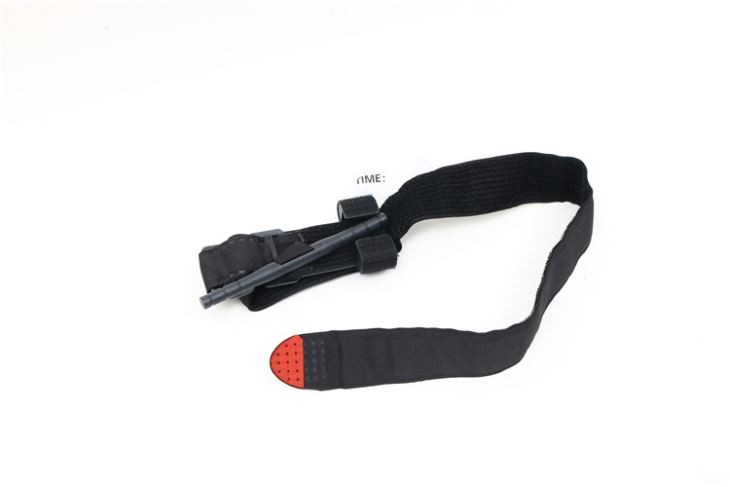
The Combat Application Tourniquet (CAT) is a revolutionary device in the field of emergency medical care, especially in situations where rapid hemorrhage control is crucial. As a Tourniquet CAT supplier, I have witnessed firsthand the diverse performance of this life - saving tool in various conditions.
Performance in Military Combat Situations
In military combat, time is of the essence when it comes to treating wounded soldiers. The CAT has been a game - changer on the battlefield. Its design allows for rapid one - handed application, which is a critical feature in high - stress combat scenarios where a soldier may need to self - apply the tourniquet or a comrade may need to apply it quickly while under fire.
The CAT's ratcheting mechanism provides a reliable and consistent tightening force. This ensures that it can effectively occlude blood flow in major arteries, even in the presence of heavy bleeding. In combat, soldiers are often exposed to high - velocity projectiles that can cause severe limb injuries. The CAT has proven to be highly effective in stopping bleeding from such wounds, significantly increasing the chances of survival for the injured.
Moreover, the CAT is durable and can withstand the harsh conditions of the battlefield. It is resistant to dirt, water, and other environmental factors. This means that it can be used in various terrains, from deserts to jungles, without losing its functionality. For example, in the arid deserts of the Middle East, where sand and dust are prevalent, the CAT has continued to perform reliably, providing crucial hemorrhage control for wounded soldiers.
Performance in Outdoor Emergency Situations
Outdoor enthusiasts, such as hikers, climbers, and hunters, are also at risk of severe injuries that may require immediate hemorrhage control. The CAT is an ideal tool for these situations. Its compact and lightweight design makes it easy to carry in a backpack or a first - aid kit.
In the mountains, where help may be hours or even days away, a severe cut or laceration can quickly become life - threatening. The CAT can be applied within minutes, stopping the bleeding and buying time until professional medical help arrives. For instance, a hiker who suffers a deep gash on their leg from a sharp rock can use the CAT to prevent excessive blood loss.
The CAT's visibility is also an advantage in outdoor settings. The bright colors of some models, like the Colors CAT Tourniquet, make it easy to locate in a cluttered first - aid kit or in low - light conditions. This ensures that it can be quickly accessed when needed.

Performance in Industrial Accidents
Industrial workplaces are filled with potential hazards that can cause serious limb injuries. The CAT has shown excellent performance in these environments as well. In factories, construction sites, and mines, workers may be injured by heavy machinery, sharp tools, or falling objects.
The CAT's ease of use is a significant advantage in industrial accidents. Workers who may not have extensive medical training can be quickly trained to apply the tourniquet. The step - by - step instructions on the CAT packaging are straightforward and easy to follow. This means that in an emergency, any nearby worker can potentially save a colleague's life by applying the CAT.
The durability of the CAT is also well - suited for industrial settings. It can withstand the rough handling and exposure to chemicals and other industrial substances. For example, in a chemical plant, where spills and splashes are possible, the CAT can still function properly after being exposed to non - corrosive chemicals.
Performance in Mass - Casualty Incidents
Mass - casualty incidents, such as terrorist attacks, natural disasters, or large - scale accidents, pose unique challenges for medical responders. The CAT can play a vital role in these situations. Its ability to be quickly applied and its high success rate in stopping bleeding make it an essential tool for triage and initial treatment.
In a mass - casualty situation, medical resources are often limited. The CAT allows responders to quickly stabilize patients with severe limb injuries, freeing up time and resources to treat other patients. For example, in a bombing incident, where multiple people may have suffered limb amputations or severe lacerations, the CAT can be used to stop the bleeding of many patients in a short period.
The standardization of the CAT also makes it easier to train large numbers of responders. Whether it is military medics, civilian first - responders, or volunteers, the same training protocol can be used for the application of the CAT. This ensures a consistent and effective response in mass - casualty scenarios.
Performance in Different Limb Sizes
One of the remarkable features of the CAT is its ability to perform well on different limb sizes. Whether it is a small child's limb or a large adult's thigh, the CAT can be adjusted to provide effective hemorrhage control.
The ratcheting mechanism allows for precise tightening, ensuring that the tourniquet can be applied snugly without causing excessive pressure that could damage the limb. This adaptability is crucial in real - life situations, where the size of the injured person can vary widely. For example, in a family hiking trip, if a child and an adult both suffer limb injuries, the same CAT can be used to treat both of them.
Comparison with Other Tourniquets
Compared to other tourniquets on the market, the CAT has several advantages. Some traditional tourniquets require two - handed application, which can be difficult in high - stress situations. The CAT's one - handed application feature gives it a significant edge, especially in scenarios where the user may be injured or have limited mobility.
The CAT also has a more reliable locking mechanism compared to some older tourniquet designs. The ratcheting system ensures that the tourniquet stays in place and maintains the desired level of pressure. In contrast, some other tourniquets may loosen over time, leading to ineffective hemorrhage control.
Conclusion
The Tourniquet CAT has demonstrated outstanding performance in a wide range of conditions, from military combat to outdoor emergencies, industrial accidents, and mass - casualty incidents. Its ease of use, durability, adaptability to different limb sizes, and effectiveness in stopping bleeding make it a top choice for hemorrhage control.
If you are in need of high - quality Tourniquet CATs for your organization, whether it is a military unit, an outdoor adventure group, an industrial company, or a medical response team, I encourage you to reach out to discuss your procurement needs. We are committed to providing the best products and services to ensure that you have the reliable hemorrhage control solutions you require.
References
- American College of Surgeons Committee on Trauma. Advanced Trauma Life Support (ATLS) Course Manual.
- National Association of Emergency Medical Technicians. Prehospital Trauma Life Support (PHTLS) Provider Manual.
- U.S. Army Institute of Surgical Research. Combat Casualty Care Guidelines.