






Gauze rolls are indispensable medical supplies used for various purposes, including wound dressing, first aid, and surgical procedures. As a leading supplier of gauze rolls, I am often asked about the materials used to make these essential products. In this blog post, I will delve into the different materials commonly used in the production of gauze rolls, their properties, and their applications.
Cotton
Cotton is one of the most widely used materials for making gauze rolls. It is a natural fiber derived from the cotton plant, known for its softness, absorbency, and breathability. These properties make cotton gauze rolls ideal for wound care, as they can absorb exudate from the wound without causing irritation to the skin.
- Properties: Cotton is a highly absorbent material, capable of holding a significant amount of liquid. It is also soft and gentle on the skin, making it suitable for use on sensitive areas. Additionally, cotton is breathable, allowing air to circulate around the wound, which can promote healing.
- Applications: Cotton gauze rolls are commonly used for dressing wounds, both minor and major. They can be used to cover and protect the wound, absorb blood and other fluids, and provide a barrier against infection. Cotton gauze is also used in surgical procedures, where it is used to soak up blood and other fluids during the operation.
For those looking for high - quality 100% cotton gauze rolls, you can check out our 100% Cotton Gauze Roll product page.
Non - woven Materials
Non - woven materials are another popular choice for making gauze rolls. These materials are made by bonding or felting fibers together rather than weaving them. Non - woven gauze rolls offer several advantages over traditional woven cotton gauze.
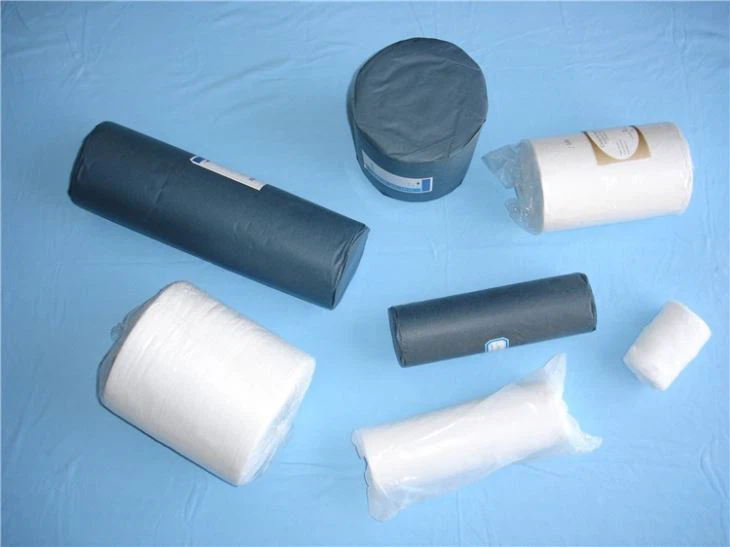

- Properties: Non - woven materials are often more cost - effective to produce. They are also highly absorbent and can be engineered to have specific properties, such as high strength or low linting. Non - woven gauze is typically more uniform in texture and can be made in a variety of thicknesses.
- Applications: Non - woven gauze rolls are used in a wide range of medical applications, including wound dressing, surgical drapes, and first - aid kits. They are especially useful in situations where a large amount of absorbency is required, such as in the treatment of heavy - bleeding wounds.
If you are interested in non - woven gauze rolls, we offer a variety of options on our Non - woven Gauze Rolls page.
Rayon
Rayon is a semi - synthetic fiber made from cellulose, usually derived from wood pulp. It has properties similar to cotton but offers some unique advantages.
- Properties: Rayon is soft, smooth, and highly absorbent. It has a good drape, which means it can conform well to the shape of the wound. Rayon is also relatively inexpensive to produce, making it a cost - effective option for gauze rolls.
- Applications: Rayon gauze rolls are commonly used in wound care, particularly for wounds that require a high level of absorbency. They can also be used in cosmetic applications, such as for facial cleansing and makeup removal.
Polyester
Polyester is a synthetic fiber known for its strength, durability, and resistance to moisture. While it is not as absorbent as cotton or rayon, it has its own set of applications in the production of gauze rolls.
- Properties: Polyester is strong and resistant to tearing, making it suitable for use in situations where the gauze needs to withstand some mechanical stress. It is also resistant to moisture, which can be an advantage in certain environments.
- Applications: Polyester gauze rolls are often used in combination with other materials, such as cotton or rayon, to provide a balance of strength and absorbency. They are used in surgical procedures, as well as in industrial applications where a durable and moisture - resistant gauze is required.
Blended Materials
In many cases, gauze rolls are made from blended materials, which combine the properties of different fibers to create a product with enhanced performance.
- Properties: Blended materials can offer the best of both worlds. For example, a blend of cotton and polyester can provide the absorbency of cotton and the strength of polyester. Blended gauze rolls can be tailored to meet specific requirements, such as high absorbency, low linting, or good drapability.
- Applications: Blended gauze rolls are used in a wide range of medical and non - medical applications. They are commonly used in wound care, as well as in the manufacturing of products such as masks, wipes, and filtration materials.
Quality Control in Material Selection
As a supplier of gauze rolls, we place a high emphasis on quality control in material selection. We source our materials from reputable suppliers and conduct rigorous testing to ensure that they meet the highest standards of quality and safety.
- Testing: Our materials are tested for various properties, including absorbency, strength, linting, and biocompatibility. We also test for the presence of any contaminants or impurities that could pose a risk to the user.
- Certifications: We ensure that our materials meet all relevant industry standards and certifications, such as ISO 13485 (Medical Devices - Quality Management Systems) and CE (Conformité Européene). This gives our customers the confidence that they are purchasing high - quality, safe, and reliable products.
Conclusion
In conclusion, the materials used to make gauze rolls vary widely, each with its own unique properties and applications. Cotton, non - woven materials, rayon, polyester, and blended materials all play important roles in the production of these essential medical supplies. As a supplier, we are committed to providing our customers with the highest quality gauze rolls made from the best materials available.
If you are interested in purchasing gauze rolls for your medical or industrial needs, we invite you to contact us for a quote and to discuss your specific requirements. Our team of experts is ready to assist you in finding the right product for your application.
References
- ASTM International. (2023). Standard Specification for Medical Gauze. ASTM F66 - 23.
- International Organization for Standardization. (2016). ISO 13485:2016 Medical devices - Quality management systems - Requirements for regulatory purposes.
- European Union. (2017). Regulation (EU) 2017/745 on medical devices.