




On June 15, 2020, a skirmish broke out between China and India at the border in Tibet. One Indian officer and two soldiers were killed, and only one of our troops was injured. This incident has drawn great attention from the Chinese and Indian governments and also attracted international attention.
This is not the first time such a skirmish has been going on since India's independence after World War II. In 1962, the first major skirmish between China and India was a skirmish, but it ended in failure. After that, the Indian government stepped up its military expansion after the defeat, doubling the size of the army and setting up seven mountain divisions to guard against China on the northern border.
In 1963, the PLA withdrew from the east and west sections of the China-India border and implemented the policy of disengagement and isolation. The direct contact area between the Chinese and Indian armies was limited to China and Sikkim (at that time, the legitimacy of Sikkim State had not been recognized by the international community. At that time, the Kingdom of Sikkim was under the influence of Indian politics and military in 1975, which was merged into India and became the Sikkim State of India. But India will be Sikkim) border, Indian troops stationed in the kingdom of Sikkim two or three mountain infantry brigades. Chumbi Valley is located at the intersection of Yadong County, Tibet Autonomous Region, Kingdom of Sikkim and Kingdom of Bhutan. The China-India border has two main passways -- Nathu La Pass and Zirila Pass. The Nathu La pass, which separates Indian and Chinese soldiers by about 20 or 30 meters, is the closest point of confrontation along the 4,000-kilometer-long border between China and India. China is in the north and India is in the south. The two armies have skirmished in the Chumbi Valley since 1963. China accused Indian troops of provocations by repeatedly crossing the border at Nathu La Pass, moving boundary markers, building fortifications and erecting telephone lines, and by intruding Indian warplanes into Kangbazong and Yadong in Tibet for reconnaissance.
On August 13, 1967, the PLA began digging trenches at Nathu La Pass. India believed that some of the trenches were in Sikkim and demanded that China withdraw its troops, but China ignored them. The Indian troops crossed the border to stretch barbed wire along the ridge of Nathu La Pass and forcibly erected it on August 18. On August 20, Chinese soldiers with weapons kept close surveillance and repeated serious warnings, but the Indian troops ignored them. On September 7, the Indian troops erected another barbed wire along the southern part of Nathu La Pass. When the PLA commander arrived and asked the Indian troops to stop, the Indian troops stabbed and wounded two Chinese soldiers. After learning of this, the Indian military leaders decided to test China. The Indian military leadership ordered the troops to set up another barbed wire fence in the middle section of the passage from Nathu La Pass to Sebla. On September 11, a formal conflict broke out between the two armies. Our troops, adhering to the belief of "no first shot" and "tit for tat, will fight for every inch of land, never show weakness and never suffer losses", repulsed the Indian troops and finally surrendered with the Indian troops raising the white flag to the border line.
Conflicts like the above have never stopped until today, and I hope that the struggle will end soon. In Tibet, the high and cold climate, combined with the rugged terrain, make it difficult for medical guards to arrive quickly in the event of injury, and soldiers rely on military first aid kits.
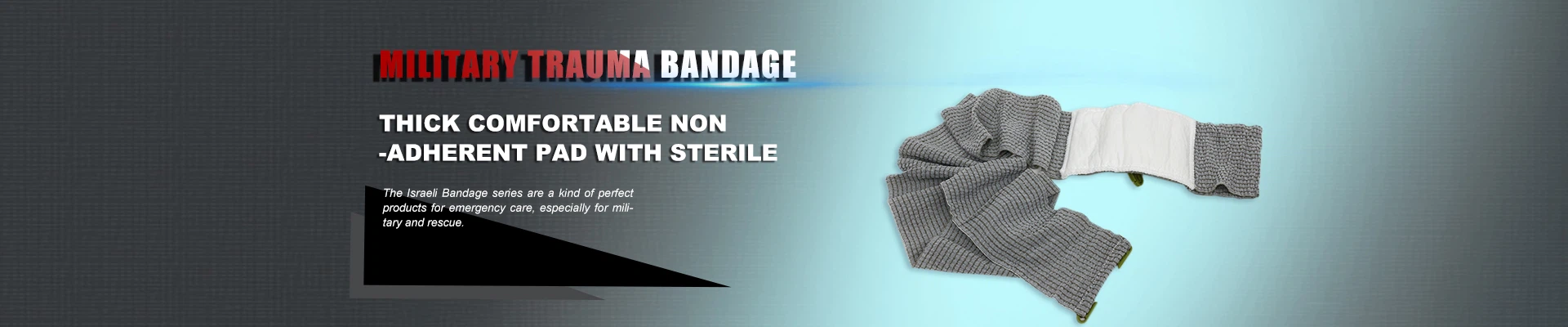
Hereby, I would like to show you a military first aid kit produced by our company.
First of all, this military first-aid kit is made of water-proof materials such as Cordura and nylon, which can effectively prevent water from penetrating the first-aid kit, thus protecting the contents of the first-aid kit. Moreover, this material is tough and wear-resistant, and not easy to break
Second, one of its great features is the variety of structures that allow it to customize its contents and determine what kind of first aid kit it is. In addition, the items in the first aid kit can be selected by the purchaser, and we will provide them to the purchaser.
Although this first aid kit has rich functions and exquisite structure, its weight is very small. At the same time, there is a strap on the back side of the first aid kit to hang the first aid kit firmly on the body, or put it in the backpack. Even among soldiers
