



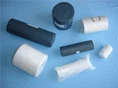



Ok, so let's talk about whether a training bandage can be used for forearm fractures. I'm a supplier of training bandages, and I often get questions from customers about the different uses of these bandages. In this blog, I'll share my thoughts and scientific knowledge on using training bandages for forearm fractures.
First off, what exactly is a training bandage? Well, we offer different types like the 4 Inch Training Bandage, the Abdominal Training Bandage, and the 6 Inch Training Bandage. These bandages are typically made of materials that are stretchy and breathable. They're designed to provide support during physical activities, like when athletes are training or when someone is doing some heavy - duty work.
Now, when it comes to using a training bandage for a forearm fracture, it's a bit of a mixed bag. A forearm fracture is a serious injury where the bone in the forearm, which consists of the radius and the ulna, is broken. When a bone breaks, you need to be extra careful.
On one hand, a training bandage can offer some form of support in the short - term. It can help to keep the broken arm in a relatively stable position, reducing the risk of further damage caused by the movement of the broken bone pieces. For example, if someone has a minor hairline fracture in the forearm and they're in a situation where they can't immediately get to a medical facility, a training bandage can act as a temporary measure. The stretchy nature of the bandage can provide a gentle compression, which might help reduce swelling to some extent.


However, there are some major limitations. A training bandage is not a substitute for proper medical treatment. It doesn't have the same level of immobilization as a cast or a splint. A cast is custom - made to fit the exact shape of the limb and provides rigid support to ensure that the broken bone heals in the correct position. A training bandage, on the other hand, is flexible. If the forearm is moved too much while using a training bandage, the broken bone fragments might shift, leading to a malunion. That means the bone can heal in an abnormal position, which can cause long - term problems like reduced range of motion, pain, and even functional impairment in the hand and forearm.
Another point to consider is the pressure distribution. A well - applied cast is designed to distribute the pressure evenly across the injured area. Training bandages might not do this as effectively. If the bandage is wrapped too tightly, it can cut off blood circulation, leading to numbness, tingling, or even more serious problems like tissue damage. On the flip side, if it's wrapped too loosely, it won't provide the necessary support.
Let's also talk about the type of fracture. There are different types of forearm fractures, such as transverse fractures, oblique fractures, and comminuted fractures. For a simple transverse fracture, a training bandage might offer a bit more support compared to a more complex comminuted fracture, where the bone is broken into multiple pieces. In a comminuted fracture, the risk of the bone fragments moving is much higher, and a training bandage is just not sufficient to hold everything in place.
In addition, from a medical - legal perspective, it's important to note that using a training bandage as the sole treatment for a forearm fracture is not advisable. Medical professionals are trained to assess the severity of the fracture and determine the appropriate treatment. If someone tries to self - treat a forearm fracture with a training bandage and then experiences complications, there could be potential legal issues.
So, while a training bandage might have a small role to play as a temporary support measure in a situation where proper medical help isn't immediately available, it should never be considered a long - term or definitive treatment for a forearm fracture.
If you're involved in physical activities and are at risk of injuries like forearm strains or minor sprains, our training bandages can be a great choice. They come in different sizes and are really versatile. You can use them to support your joints and muscles during workouts. The 4 Inch Training Bandage is great for smaller areas, while the 6 Inch Training Bandage can cover a larger expanse. And the Abdominal Training Bandage is perfect for providing support to the abdominal area.
If you're interested in purchasing our high - quality training bandages, we're always open to having a chat about your needs. Whether you're a sports team, a fitness center, or an individual looking for reliable support during your workouts, we can offer you the right products. Just reach out to us to start a conversation about your requirements and how our training bandages can fit into your needs.
References
- "Fracture Management: Principles and Applications" by John A. Buckwalter, Joseph M. Lane, and Andrew H. Glaser
- "Sports Medicine: A Comprehensive Review" by Matthew J. Matava and Christopher M. Ahmad