



Is a Gauze Roll flame - retardant?

As a supplier of Gauze Rolls, I often encounter various questions from customers, and one that frequently comes up is whether a Gauze Roll is flame - retardant. This is a crucial question, especially considering the diverse applications of Gauze Rolls in different industries, from medical to industrial settings. In this blog, I will delve into the topic to provide a comprehensive understanding of the flame - retardant properties of Gauze Rolls.
Types of Gauze Rolls and Their Materials
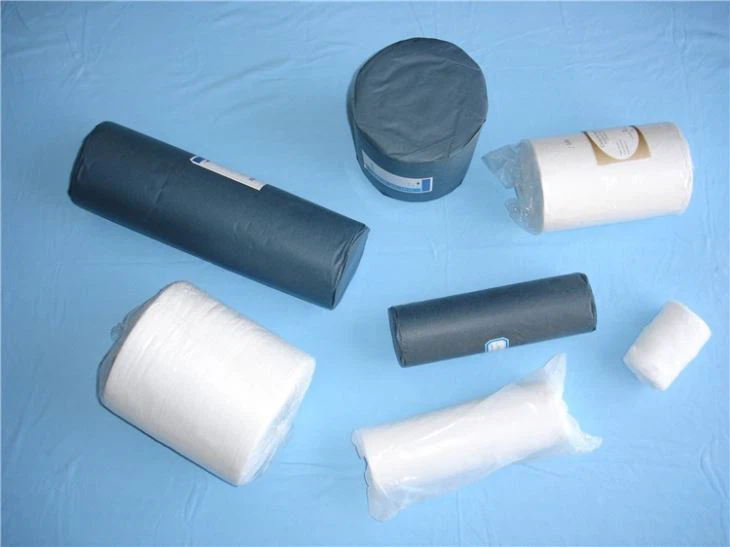
First, let's take a look at the common types of Gauze Rolls available in the market. We offer two main types: 100% Cotton Gauze Roll and Non - woven Gauze Rolls.
The 100% Cotton Gauze Roll is made entirely of natural cotton fibers. Cotton is a widely used material in the production of Gauze Rolls due to its softness, breathability, and absorbency. It is commonly used in medical applications, such as wound dressing, as it is gentle on the skin and can effectively absorb exudates. However, cotton is a highly flammable material. It has a low ignition temperature and can burn rapidly once ignited. When exposed to an open flame, cotton Gauze Rolls will catch fire easily and continue to burn until the fuel (the cotton fibers) is consumed.
On the other hand, Non - woven Gauze Rolls are made from synthetic fibers or a combination of synthetic and natural fibers. The manufacturing process of non - woven materials involves bonding the fibers together through mechanical, chemical, or thermal means, rather than weaving them. The flame - retardant properties of Non - woven Gauze Rolls depend on the type of fibers used. Some synthetic fibers, such as polyester, have better flame - retardant characteristics compared to cotton. Polyester has a higher melting point and is less likely to ignite. When exposed to fire, polyester may melt and drip rather than burn vigorously. However, not all non - woven Gauze Rolls are flame - retardant. It depends on whether the fibers used have been treated with flame - retardant chemicals during the manufacturing process.
Factors Affecting Flame - retardant Properties
Several factors can affect the flame - retardant properties of Gauze Rolls.
Fiber Composition: As mentioned earlier, the type of fibers used in the Gauze Roll plays a significant role. Natural fibers like cotton are generally more flammable than some synthetic fibers. For example, aramid fibers are known for their excellent flame - retardant properties. They can withstand high temperatures without burning and are often used in industrial applications where fire safety is a major concern.
Flame - retardant Treatments: Many manufacturers, including us, offer flame - retardant treated Gauze Rolls. These treatments involve applying special chemicals to the fibers during the manufacturing process. These chemicals work in different ways to prevent or slow down the spread of fire. Some chemicals release non - flammable gases when heated, which can dilute the oxygen around the Gauze Roll and suppress combustion. Others form a protective char layer on the surface of the fibers, which acts as a barrier between the flame and the fuel, preventing further burning.
Thickness and Density: The thickness and density of the Gauze Roll can also affect its flame - retardant properties. A thicker and denser Gauze Roll may take longer to ignite and burn compared to a thinner and less dense one. This is because there is more material to absorb the heat from the flame, and the heat transfer is slower through a thicker layer.
Applications and Flame - retardant Requirements
The flame - retardant requirements of Gauze Rolls vary depending on their applications.
Medical Applications: In the medical field, the primary concern is the safety and comfort of the patient. While flame - retardant properties are not the top priority, it is still important to ensure that the Gauze Roll does not pose a fire hazard. For example, in operating rooms where there may be electrical equipment and flammable anesthetics, using flame - retardant Gauze Rolls can add an extra layer of safety. However, most medical Gauze Rolls are not specifically treated for flame - retardancy, as long as they meet the basic safety standards.
Industrial Applications: In industrial settings, such as manufacturing plants, construction sites, and laboratories, flame - retardant Gauze Rolls are often required. For example, in the electronics industry, Gauze Rolls may be used for cleaning and wiping. If there is a risk of fire due to electrical sparks or flammable chemicals, using flame - retardant Gauze Rolls can prevent potential disasters. In the construction industry, Gauze Rolls may be used for insulation or as a component in fire - resistant materials.
Testing and Certification
To ensure the flame - retardant properties of our Gauze Rolls, we conduct rigorous testing. We follow international standards such as ASTM D6413 (Standard Test Method for Flame Resistance of Textiles) and ISO 6941 (Textiles - Burning behaviour - Determination of flame spread properties of vertically oriented specimens). These tests measure the ignition time, flame spread rate, and after - flame time of the Gauze Rolls.
If our Gauze Rolls pass these tests, they can obtain relevant certifications. These certifications are important as they provide customers with confidence in the quality and safety of our products. When customers are looking for flame - retardant Gauze Rolls, they should always check for these certifications to ensure that the products meet the required standards.
Conclusion
In conclusion, not all Gauze Rolls are flame - retardant. The flame - retardant properties depend on the type of fibers, whether they have been treated with flame - retardant chemicals, and other factors such as thickness and density. As a supplier, we offer a range of Gauze Rolls, including both standard and flame - retardant options, to meet the diverse needs of our customers.
If you are in need of Gauze Rolls for your specific application and have concerns about flame - retardancy, please feel free to contact us for more information. We are committed to providing high - quality products that meet your requirements and ensure your safety. Our team of experts can help you choose the right type of Gauze Roll based on your needs and the relevant safety standards.
References
- ASTM D6413 - 15, Standard Test Method for Flame Resistance of Textiles.
- ISO 6941:2003, Textiles - Burning behaviour - Determination of flame spread properties of vertically oriented specimens.