







On March 31, local time, the Israeli negotiating delegation went to Cairo, the Egyptian capital, to participate in a new round of ceasefire talks in the Gaza Strip.
An Israeli official, speaking on condition of anonymity, said Israel sent a negotiating delegation to Cairo on March 31 to discuss a cease-fire in the Gaza Strip and the release of detainees. According to Egyptian media reports, since Hamas and Israel refused to negotiate face to face, the current round of talks was set as indirect talks, with Egypt and Qatar responsible for "passing words" between Hamas and Israeli representatives.
Analysts say the main sticking point in the current negotiations has been the two sides' failure to agree on an exchange of detainees. The US media previously disclosed that Israel was considering releasing hundreds of Palestinian detainees in exchange for the release of some Israeli personnel held by Hamas in the Gaza Strip, and this plan is waiting for the response of Hamas's senior leadership. In addition, Hamas has also proposed conditions for the return of displaced people in the Gaza Strip to northern Gaza, but Israel has said it is only willing to discuss allowing some of the displaced to return to northern Gaza.
Since the outbreak of the current round of Palestinian-Israeli conflict, under the mediation of Qatar, Egypt and other parties, Israel and Hamas agreed to a one-week ceasefire and release some personnel in November last year. Since then, the international community has actively mediated and organized several rounds of negotiations on the resumption of the ceasefire between the two sides, but so far, no final agreement has been reached. Following the adoption by the United Nations Security Council on March 25 of a resolution calling for an immediate ceasefire in the Gaza Strip during Ramadan, Israel withdrew its representatives from the Qatari capital, Doha, putting the negotiations at a new impasse.
Today, I bring you one of our key products, Mini Dressing.
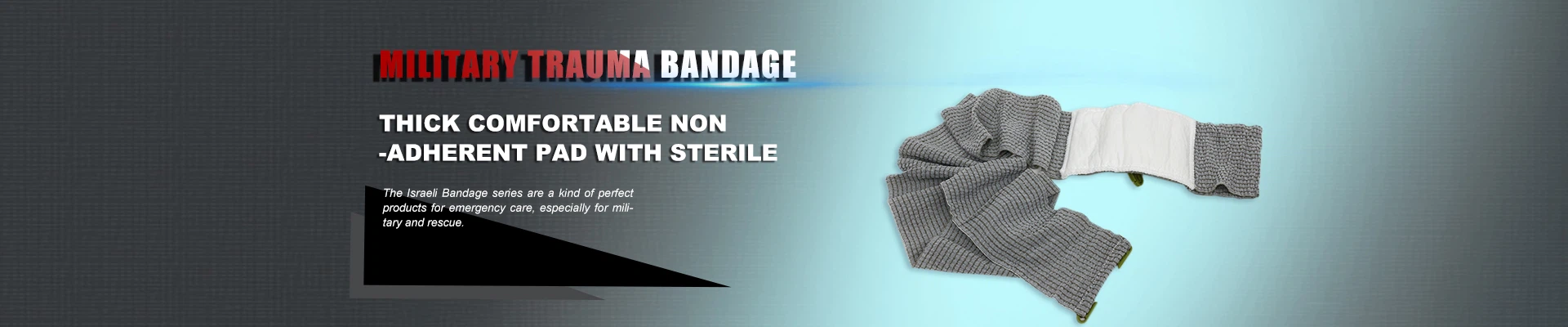
Mini dressings are designed for wound care. They protect the patient's open wound and can be immediately and directly placed over the wound and pressure the wound to stop bleeding. However, this product can only be used for minor wound care. For severe wounds, use the Military Trauma Bandage or others. Mini Dressing consists of a long, stretchy Bandage and thick, nonadhesive pad that are sterile and can be used when you open a bag. Because of its simple but practical design, this product allows healthcare workers to quickly apply it to wounds under the most demanding conditions. It is also very affordable and can be used in trauma first aid training.