



Can a training bandage be used during rehabilitation?
Rehabilitation is a crucial phase in the recovery process after an injury or surgery. It aims to restore function, reduce pain, and improve the overall quality of life for patients. One question that often arises is whether a training bandage can be used during rehabilitation. As a training bandage supplier, I am well - versed in the features and potential applications of these products, and I will explore this topic in detail.
Understanding Training Bandages
Training bandages come in various types, sizes, and materials. For instance, we offer Abdominal Training Bandage, 6 Inch Training Bandage, and 4 Inch Training Bandage. These bandages are typically made from elastic or non - elastic materials. Elastic training bandages are stretchable, which allows them to conform to the body's shape and provide a certain degree of compression. Non - elastic bandages, on the other hand, are more rigid and are often used for immobilization.
The main functions of training bandages include providing support to muscles and joints, reducing swelling, and preventing further injury. They can be used in a variety of sports and training scenarios, such as weightlifting, running, and gymnastics. But can they also play a role in the rehabilitation process?
The Role of Training Bandages in Rehabilitation
Support and Stability
During rehabilitation, the injured area is often weak and unstable. A training bandage can offer external support to the affected muscles and joints. For example, in the case of a sprained ankle, an elastic training bandage can be wrapped around the ankle to provide compression and support. This helps to limit excessive movement, which is beneficial for the healing process. By reducing the range of motion, the bandage can prevent further damage to the injured ligaments and tendons.
In addition, for patients who have undergone knee surgery, a knee - specific training bandage can help to stabilize the joint. It can assist in maintaining proper alignment and reduce the stress on the surgical site. This support is especially important during the early stages of rehabilitation when the patient is gradually regaining strength and mobility.
Swelling Reduction
Swelling is a common symptom after an injury or surgery. Compression provided by a training bandage can help to reduce swelling by promoting blood circulation and lymphatic drainage. When a bandage is applied correctly, it exerts pressure on the affected area, which helps to push excess fluid out of the tissues. This not only reduces the swelling but also relieves pain associated with the buildup of fluid.
For example, in the case of a muscle contusion, a properly wrapped training bandage can significantly reduce the swelling within a few hours. This is particularly important in rehabilitation as excessive swelling can impede the healing process and delay the patient's recovery.
Pain Management
The support and compression provided by a training bandage can also have a pain - relieving effect. By stabilizing the injured area and reducing swelling, the bandage can alleviate pain caused by movement and inflammation. This allows patients to engage in rehabilitation exercises more comfortably, which is essential for a successful recovery.
For instance, patients with lower back pain may find that wearing an Abdominal Training Bandage provides support to the abdominal and back muscles, reducing the strain on the lower back and thus relieving pain. This enables them to perform gentle back - strengthening exercises without experiencing excessive discomfort.
Considerations When Using Training Bandages in Rehabilitation
Proper Application
The effectiveness of a training bandage in rehabilitation depends largely on its proper application. If the bandage is wrapped too tightly, it can restrict blood flow, leading to numbness, tingling, or even tissue damage. On the other hand, if it is wrapped too loosely, it may not provide adequate support or compression.
It is recommended that patients or caregivers receive proper training on how to apply the bandage correctly. This may involve learning the appropriate wrapping techniques for different body parts, such as the ankle, knee, or wrist. In some cases, a healthcare professional may be needed to ensure the bandage is applied safely and effectively.
Skin Sensitivity
Some patients may have sensitive skin, and the use of a training bandage can cause skin irritation or allergic reactions. Before using a bandage, it is important to check the patient's skin for any signs of sensitivity. If the patient has a history of skin allergies, a hypoallergenic bandage may be a better option.
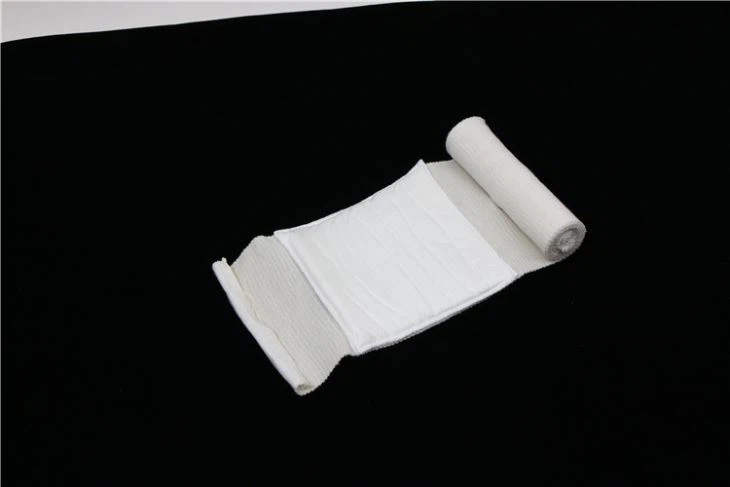

In addition, the bandage should be removed regularly to allow the skin to breathe and to check for any signs of skin problems. If redness, itching, or blisters develop, the bandage should be discontinued immediately, and a healthcare provider should be consulted.
Compatibility with Rehabilitation Exercises
The use of a training bandage should be compatible with the rehabilitation exercises prescribed by the healthcare provider. In some cases, the bandage may need to be removed during certain exercises to allow for full range of motion. For example, during flexibility exercises, a tightly wrapped bandage may restrict movement and prevent the patient from achieving the desired stretch.
It is important for patients to communicate with their healthcare providers about the use of training bandages during rehabilitation. The healthcare provider can provide guidance on when and how to use the bandage in conjunction with the rehabilitation program.
Conclusion
In conclusion, training bandages can be a valuable tool during rehabilitation. They can provide support, reduce swelling, and manage pain, all of which are important factors in the recovery process. However, it is essential to use them correctly, taking into account factors such as proper application, skin sensitivity, and compatibility with rehabilitation exercises.
As a training bandage supplier, we are committed to providing high - quality products that meet the needs of patients during rehabilitation. Our Abdominal Training Bandage, 6 Inch Training Bandage, and 4 Inch Training Bandage are designed to offer optimal support and compression.
If you are interested in purchasing our training bandages for rehabilitation purposes or have any questions about our products, please feel free to contact us for further discussion and potential procurement opportunities. We look forward to serving you and contributing to the successful rehabilitation of patients.
References
- Knight, K. L. (2004). Manual of sports injuries and rehabilitation. Lippincott Williams & Wilkins.
- Norkin, C. C., & White, D. J. (2011). Measurement of joint motion: A guide to goniometry. F. A. Davis.
- Vanderleest, D. (2015). Bandaging techniques for the equine athlete. AAEP Yearbook of Equine Science.