






As a supplier of Gauze Rolls, I often get asked about the various properties of our products, and one question that frequently comes up is, "What is the elasticity of a Gauze Roll?" In this blog post, I'll delve into the concept of elasticity in Gauze Rolls, explaining what it means, why it matters, and how it varies across different types of Gauze Rolls.
Understanding Elasticity in Gauze Rolls
Elasticity, in the context of Gauze Rolls, refers to the ability of the gauze material to stretch under tension and then return to its original shape once the tension is removed. This property is crucial as it determines how well the gauze can conform to the body's contours and maintain its position during use.
The elasticity of a Gauze Roll is influenced by several factors, including the type of fibers used, the weave pattern, and the manufacturing process. For instance, gauze made from natural fibers like cotton may have different elastic properties compared to those made from synthetic materials. Additionally, the tightness of the weave can also affect how much the gauze can stretch and how quickly it returns to its original form.
Importance of Elasticity in Medical Applications
In medical settings, the elasticity of a Gauze Roll plays a vital role in wound care and patient comfort. When used as a dressing, an elastic gauze can conform to the shape of the wound, providing a secure and snug fit. This helps to prevent the dressing from shifting or coming loose, which is essential for maintaining a clean and protected environment for the wound to heal.
Moreover, an elastic gauze can also accommodate changes in the body's shape and movement. For example, when a patient bends or flexes a joint, the elastic gauze can stretch and move with the body, reducing the risk of irritation or discomfort. This is particularly important for long-term wound dressings, where patient comfort is a key consideration.
Elasticity in Different Types of Gauze Rolls
100% Cotton Gauze Roll
100% Cotton Gauze Roll is a popular choice in medical and other applications due to its natural, breathable, and hypoallergenic properties. Cotton fibers have some inherent elasticity, but it is generally less than that of synthetic materials. However, the elasticity of 100% Cotton Gauze Roll can vary depending on the specific weave and manufacturing process.
A loosely woven cotton gauze may have more stretchability, allowing it to conform well to irregular shapes. On the other hand, a tightly woven cotton gauze may have less stretch but offer greater strength and durability. The choice between a more elastic or less elastic cotton gauze depends on the intended use. For example, a more elastic cotton gauze may be preferred for wrapping joints, while a less elastic one may be suitable for general wound dressing.

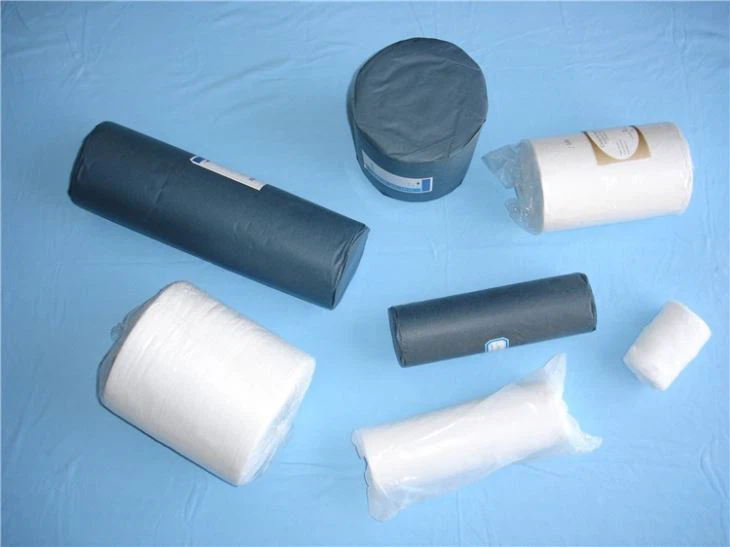
Non-woven Gauze Rolls
Non-woven Gauze Rolls are made from fibers that are bonded together rather than woven. These rolls often have different elastic properties compared to woven gauze. Non-woven materials can be engineered to have specific levels of elasticity, depending on the type of fibers used and the bonding process.
Some non-woven Gauze Rolls are designed to be highly elastic, making them ideal for applications where a high degree of stretch and conformability is required. For example, in sports medicine, highly elastic non-woven gauze can be used to wrap injured joints, providing support while allowing for a full range of motion. Other non-woven gauze may have less elasticity but offer other advantages such as high absorbency or a soft texture.
Measuring the Elasticity of Gauze Rolls
Measuring the elasticity of a Gauze Roll typically involves subjecting a sample of the gauze to a controlled amount of tension and measuring the amount of stretch. This is usually done using a tensile testing machine, which applies a gradually increasing force to the gauze until it reaches a specified limit or breaks.
The results of the tensile test can be used to calculate several parameters related to elasticity, such as the modulus of elasticity, which measures the stiffness of the material, and the elongation at break, which indicates the maximum amount of stretch the gauze can withstand before breaking. These parameters are important for comparing the elastic properties of different types of Gauze Rolls and for ensuring that the product meets the required standards for its intended use.
Factors Affecting the Elasticity of Gauze Rolls
In addition to the type of fibers and the weave pattern, several other factors can affect the elasticity of Gauze Rolls. These include:
- Moisture Content: Moisture can have a significant impact on the elasticity of gauze. When a gauze roll absorbs moisture, the fibers may swell, which can either increase or decrease the elasticity depending on the type of fibers. For example, cotton gauze may become more pliable and stretchable when wet, while some synthetic materials may lose their elasticity.
- Temperature: Temperature can also affect the elastic properties of gauze. In general, higher temperatures can make the fibers more flexible and increase the stretchability of the gauze, while lower temperatures can make the gauze stiffer and less elastic.
- Age and Storage Conditions: Over time, the elasticity of a Gauze Roll may degrade due to factors such as exposure to light, air, and chemicals. Proper storage conditions, such as keeping the gauze in a cool, dry place away from direct sunlight, can help to preserve its elastic properties.
Choosing the Right Elasticity for Your Needs
When selecting a Gauze Roll, it's important to consider the specific requirements of your application. If you need a gauze that can conform to irregular shapes and provide a high degree of stretch, you may want to choose a more elastic option, such as a highly elastic non-woven gauze or a loosely woven cotton gauze.
On the other hand, if you need a gauze that offers more stability and less stretch, a less elastic option may be more suitable. For example, a tightly woven cotton gauze or a non-woven gauze with low elasticity may be better for applications where the dressing needs to stay in place without shifting.
Conclusion
The elasticity of a Gauze Roll is an important property that can significantly impact its performance in various applications. Whether you're using gauze for medical wound care, industrial applications, or other purposes, understanding the factors that affect elasticity and choosing the right type of gauze for your needs is crucial.
As a supplier of Gauze Rolls, we offer a wide range of products with different elastic properties to meet the diverse needs of our customers. If you're interested in learning more about our Gauze Rolls or have specific requirements for your application, we invite you to contact us for a detailed discussion and to explore our product offerings. Our team of experts is ready to assist you in finding the perfect Gauze Roll solution for your needs.
References
- ASTM International. (2023). ASTM D882 - 18: Standard Test Method for Tensile Properties of Thin Plastic Sheeting.
- Textile Institute. (2019). Handbook of Textile Fibre Structure, Volume 1: Natural Fibres. Woodhead Publishing.
- Medical Textiles Association. (2022). Best Practices for Wound Care Dressings.