



Hey there! As a supplier of Sterile Gauze Balls, I often get asked about how well these little guys stand up to friction. So, I thought I'd take a deep dive into this topic and share some insights with you.
First off, let's talk about what sterile gauze balls are. They're super handy medical supplies, used in all sorts of healthcare settings. You can find them in hospitals, clinics, and even in first - aid kits at home. The Sterile Gauze Ball is made from high - quality materials that are processed to be free from any harmful microorganisms. This makes them safe to use on wounds, for cleaning, and for other medical procedures.
Now, when it comes to friction, it's a big deal. Friction can occur in many situations where gauze balls are used. For example, when you're cleaning a wound, you're applying some pressure and rubbing the gauze against the skin. In surgical procedures, the gauze might be used to wipe or absorb fluids, and that involves a certain amount of friction too.
One of the key factors that determine how well sterile gauze balls stand up to friction is the material they're made of. Most of our sterile gauze balls are crafted from fine cotton fibers. Cotton is a natural material that has some great properties. It's soft, which means it won't cause too much irritation to the skin even when there's friction. At the same time, it's strong enough to withstand the rubbing and scrubbing. The fibers in the cotton are woven together in a way that gives the gauze ball its structure. This tight weaving helps the gauze maintain its shape and integrity when it's subjected to friction.
Let's take a closer look at the manufacturing process. We use advanced techniques to ensure that the cotton fibers are evenly distributed throughout the gauze ball. This uniformity is crucial because it means that the friction is evenly spread across the surface of the gauze. If the fibers were clumped together in some areas and sparse in others, the gauze would be more likely to tear or fall apart under friction.
Another important aspect is the thread count. A higher thread count generally means a stronger and more durable gauze. Our sterile gauze balls have a relatively high thread count, which gives them better resistance to friction. The threads are tightly packed, making the gauze less likely to fray or shed fibers when rubbed against a surface.
We also conduct a series of quality control tests to make sure our gauze balls can handle friction. We simulate real - life situations by using mechanical devices that rub the gauze against different surfaces with varying degrees of pressure. This allows us to identify any potential weaknesses in the product and make adjustments to the manufacturing process if needed.
In comparison, Non - sterile Gauze Ball and Non - sterile Non - woven Gauze Ball have different characteristics when it comes to friction. Non - sterile gauze balls are usually made for less critical applications where sterility isn't a top priority. They might be used in industrial settings or for general cleaning purposes. The material and construction of non - sterile gauze balls are often less refined than their sterile counterparts. They may not have the same level of resistance to friction because they're not designed to be used in high - stress medical situations.
Non - woven gauze balls, on the other hand, are made from fibers that are bonded together rather than woven. This gives them a different texture and feel. While non - woven materials can be quite absorbent, they may not stand up to friction as well as woven cotton gauze. The bonding between the fibers can break down more easily under friction, causing the gauze to lose its shape or shed fibers.
So, how does all this translate into real - world use? Well, in a medical setting, you want a gauze ball that can do its job without falling apart. When a nurse is cleaning a patient's wound, she needs a gauze that won't leave fibers behind or tear in the middle of the process. Our sterile gauze balls are designed to meet these requirements. They can be used multiple times during a procedure, withstanding the friction of repeated wiping and cleaning.
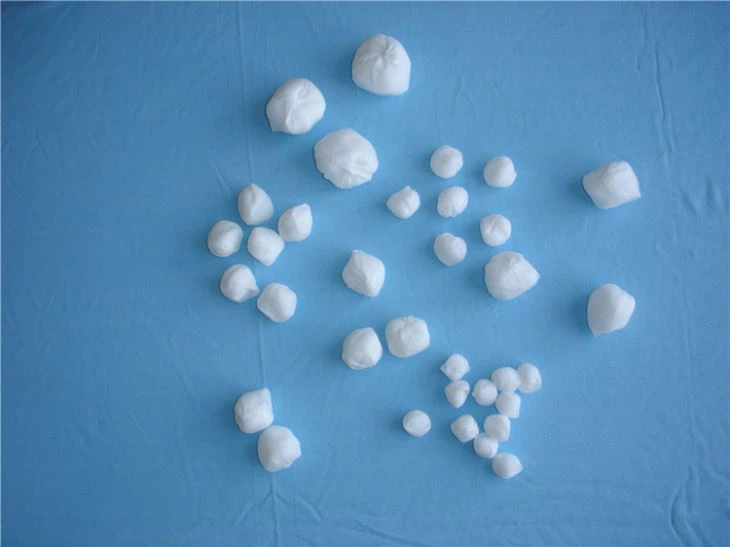
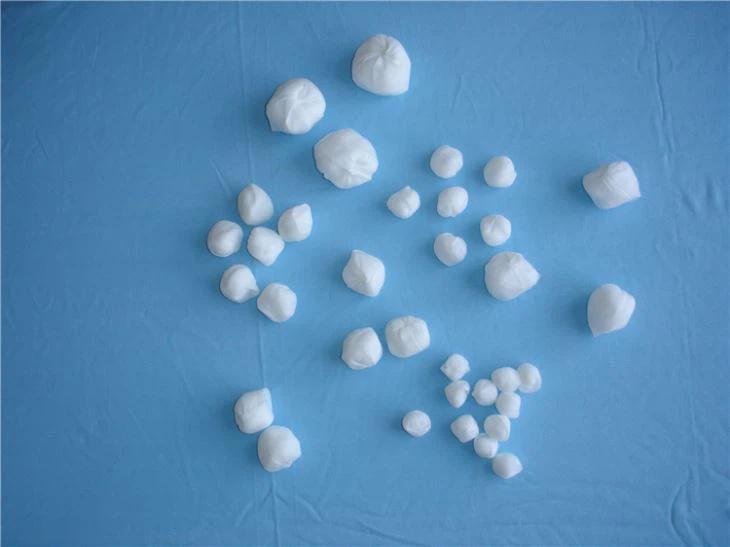
In addition to the material and construction, the size of the gauze ball also plays a role in its ability to handle friction. A larger gauze ball has more surface area, which means the friction is spread out over a wider area. This can reduce the stress on any one part of the gauze and make it less likely to tear. However, we also offer smaller gauze balls for more precise applications. These smaller ones are still strong enough to handle the friction associated with their intended use, but they're more suitable for areas where a larger gauze ball would be too bulky.
Moisture can also affect how well sterile gauze balls stand up to friction. In a medical environment, the gauze might get wet with blood, saline solution, or other fluids. When the gauze is wet, it can become more pliable, but it can also be more prone to tearing if the friction is too high. Our gauze balls are designed to maintain their strength even when wet. The cotton fibers have some natural absorbency, but they also retain their structural integrity when saturated.
To sum it up, our sterile gauze balls are built to withstand friction. The combination of high - quality cotton, advanced manufacturing techniques, and strict quality control ensures that they can perform well in a variety of situations. Whether you're a healthcare professional looking for a reliable gauze for medical procedures or someone stocking up a first - aid kit at home, you can count on our sterile gauze balls to get the job done.
If you're interested in purchasing our Sterile Gauze Balls, we'd love to have a chat with you. We can discuss your specific needs, quantity requirements, and pricing. Just reach out, and we'll be happy to assist you in finding the right product for your situation.
References
- Textile Science textbooks for information on cotton properties and weaving techniques.
- Medical supply industry reports on the performance of different types of gauze in various applications.