



Hey there! As a gauze roll supplier, I often get asked about how to measure the thickness of a gauze roll. It might seem like a simple question, but there's actually quite a bit to it. In this blog, I'll share some practical ways to measure the thickness of a gauze roll and why it matters.
First off, why do we even need to measure the thickness of a gauze roll? Well, the thickness can affect its performance in different applications. For medical use, a thicker gauze roll might provide better absorption and protection, while in industrial settings, it could impact how well it functions as a cleaning or insulating material.
Let's start with the basic tools you'll need for measuring. You don't need anything too fancy. A micrometer is a great tool for this job. It's a precision instrument that can measure small distances very accurately. You can find a good quality micrometer at most hardware stores or online. Another option is a caliper. It's also quite useful and a bit more versatile than a micrometer. You can use it to measure the outer diameter of the gauze roll as well as other dimensions.
Now, let's get into the actual measurement process. The first step is to make sure your gauze roll is in good condition and properly unwound. If it's all bunched up or has any wrinkles, it can affect the accuracy of your measurement. So, take a little time to straighten it out.
If you're using a micrometer, here's how you do it. First, open the micrometer jaws wide enough to fit the gauze roll. Then, gently place the gauze between the jaws. Make sure it's positioned evenly and not tilted. Slowly close the jaws until they just touch the gauze. You'll feel a slight resistance when they make contact. At this point, look at the scale on the micrometer to read the measurement. Most micrometers have a digital display these days, which makes it really easy to get an accurate reading.
If you're using a caliper, the process is similar. Open the caliper jaws and place the gauze between them. Close the jaws until they touch the gauze, and then read the measurement on the caliper scale. Some calipers also have a digital display for added convenience.

It's important to take multiple measurements at different points along the gauze roll. This is because the thickness might vary slightly from one part of the roll to another. Take at least three to five measurements and then calculate the average. This will give you a more accurate representation of the overall thickness of the gauze roll.
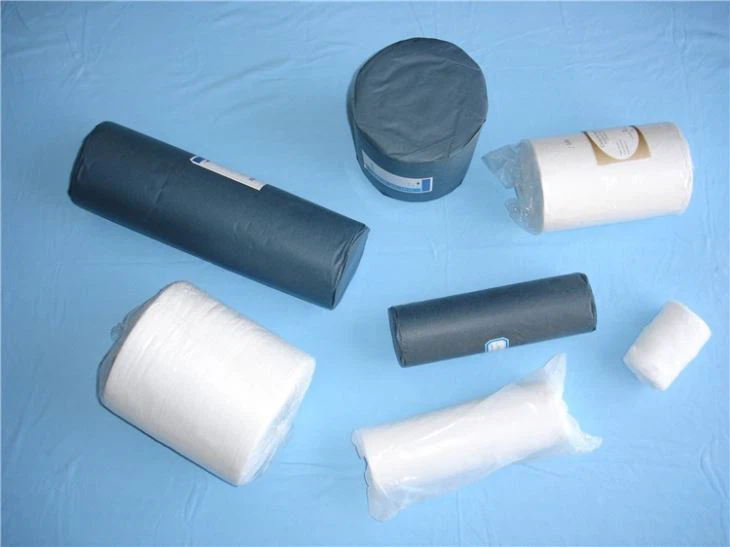
Another thing to keep in mind is that the type of gauze can also affect the measurement. For example, a 100% Cotton Gauze Roll might have a different thickness compared to a Non-woven Gauze Rolls. Cotton gauze is usually more porous and might have a slightly uneven thickness due to the natural fibers. Non-woven gauze, on the other hand, is made from synthetic fibers and might be more uniform in thickness.
When measuring these different types of gauze, you might need to adjust your measurement technique slightly. For cotton gauze, make sure you're not pressing too hard with the measuring tool, as it can compress the fibers and give you an inaccurate measurement. With non-woven gauze, you can be a bit more firm with your measurement, but still be careful not to damage the material.
In addition to using physical measurement tools, there are also some other methods you can try. One method is to use a thickness gauge that works based on the principle of capacitance. These gauges can measure the thickness of the gauze without actually touching it. They work by measuring the electrical capacitance between two plates, and the thickness of the material affects this capacitance. However, these gauges can be a bit more expensive and might not be as commonly available as micrometers or calipers.
Another method is to use optical measurement techniques. These techniques use lasers or other light sources to measure the thickness of the gauze. They can be very accurate, but they also require specialized equipment and might be more suitable for large-scale manufacturing or quality control settings.
Once you've measured the thickness of the gauze roll, you can use this information to ensure that it meets the requirements of your specific application. If you're a medical professional, you might need a certain thickness of gauze for wound dressing. If you're in the industrial sector, you might need a specific thickness for a particular cleaning or insulating task.
As a gauze roll supplier, I understand the importance of providing high-quality products with accurate thickness measurements. That's why we have strict quality control measures in place to ensure that our gauze rolls meet the highest standards. We use the latest measurement techniques and equipment to make sure that every roll we supply is of the right thickness.
If you're interested in purchasing our gauze rolls, whether it's the 100% Cotton Gauze Roll or the Non-woven Gauze Rolls, we'd love to hear from you. We can provide you with samples so you can test the thickness and quality of our products for yourself. And if you have any specific requirements or questions about the thickness or other properties of our gauze rolls, our team of experts is always here to help.
In conclusion, measuring the thickness of a gauze roll is an important step in ensuring its quality and suitability for different applications. By using the right tools and techniques, you can get an accurate measurement and make informed decisions about which gauze roll is best for you. So, if you're in the market for high-quality gauze rolls, don't hesitate to get in touch with us. We're here to provide you with the best products and service possible.
References:
- Handbook of Textile Testing and Quality Control
- Textile Measurement and Testing Techniques