




Hey there! As a supplier of medical tissues, I've spent a ton of time diving into the nitty - gritty details of both human and animal medical tissues. And let me tell you, there are some pretty significant differences that are super important for anyone in the medical field to understand.
First off, let's talk about the structure. Human tissues are highly specialized and organized in a way that supports our complex physiological functions. For example, human skin is made up of multiple layers, including the epidermis, dermis, and subcutaneous tissue. Each layer has a specific role. The epidermis acts as a protective barrier against the outside world, preventing the entry of pathogens and reducing water loss. The dermis contains blood vessels, nerves, and hair follicles, which are crucial for temperature regulation, sensation, and hair growth.
On the other hand, animal tissues can vary widely depending on the species. Take a reptile's skin, for instance. It's covered in scales, which serve as a tough, waterproof barrier. Unlike human skin, reptile skin doesn't have the same level of flexibility and elasticity. This is because their lifestyle and environmental needs are different. Reptiles need to protect themselves from dry conditions and physical abrasions in their natural habitats.
Another big difference lies in the cellular composition. Human cells are highly differentiated and have specific functions. Our muscle cells, for example, are designed to contract and relax, allowing us to move. There are different types of muscle cells, like skeletal, cardiac, and smooth muscles, each with its own unique structure and function.
In animals, the cellular makeup can be quite distinct. Insects have a completely different type of muscle system. Their muscles are attached to an exoskeleton, and they work in a way that enables rapid and precise movements for flight, crawling, or jumping. The cells in an insect's muscle are adapted to these high - energy and quick - response activities.
When it comes to the immune response, humans and animals also show marked differences. The human immune system is a complex network of cells, tissues, and organs that work together to defend the body against pathogens. We have a highly developed adaptive immune system, which means that our bodies can recognize and remember specific pathogens. This is why we can develop immunity to diseases like measles after being vaccinated or infected.
Animals, however, have varying degrees of immune complexity. Some animals, like sharks, have a relatively simple immune system. They rely more on innate immunity, which is the body's first line of defense. Their immune cells are designed to recognize and attack foreign invaders in a more general way, without the same level of specificity as the human adaptive immune system.

Now, let's talk about how these differences impact the use of medical tissues. In human medicine, medical tissues are often used for transplantation, wound healing, and tissue engineering. For example, skin grafts are used to treat severe burns. These grafts need to be carefully matched to the patient's immune system to avoid rejection.
In veterinary medicine, the use of medical tissues is also important but tailored to the specific needs of animals. For example, in horses, tendon and ligament injuries are common. Veterinarians may use tissue - based therapies to promote healing. But the tissues used in animals don't need to meet the same strict immunological compatibility requirements as human tissues because animals' immune systems are different.
As a medical tissues supplier, I understand the importance of these differences. We offer a range of products that are suitable for both human and animal medical applications. If you're in the market for some high - quality medical products, we've got you covered. For example, we have the Chest Tension Pneumothorax Needle Kits, which are essential for treating pneumothorax in both human and animal patients. These kits are designed to be easy to use and effective in emergency situations.
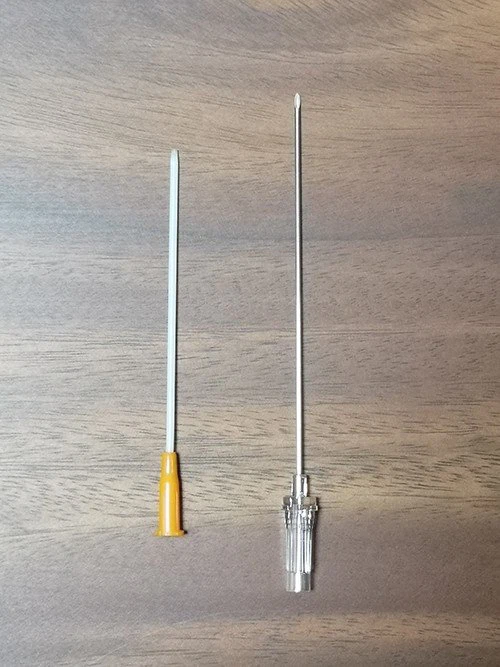
We also have the Pen - like I.V. Catheter, which is a great option for administering fluids and medications. Its unique design makes it convenient for both human and veterinary use.
And if you're looking for a decompression needle kit, our 14G Decompression Needle Kit X - ray is a top - notch choice. It's designed to provide accurate and reliable decompression in various medical scenarios.
Whether you're a human medical professional or a veterinarian, understanding the differences between human and animal medical tissues is crucial. It helps us choose the right products and treatments for our patients. If you're interested in learning more about our medical tissues and products, or if you want to discuss a potential purchase, don't hesitate to reach out. We're here to provide you with the best solutions for your medical tissue needs.
In conclusion, the differences between human and animal medical tissues are vast and complex. These differences stem from the unique evolutionary paths, physiological functions, and environmental adaptations of humans and animals. As a medical tissues supplier, I'm committed to providing high - quality products that meet the diverse needs of both human and animal medical fields.
References
- Alberts, B., Johnson, A., Lewis, J., Raff, M., Roberts, K., & Walter, P. (2002). Molecular Biology of the Cell. Garland Science.
- Janeway, C. A., Travers, P., Walport, M., & Shlomchik, M. J. (2001). Immunobiology: The Immune System in Health and Disease. Garland Science.
- Schmidt - Nielsen, K. (1997). Animal Physiology: Adaptation and Environment. Cambridge University Press.